Archive

Tag Archives: history

While reading all the Education Secretary biographies I’m also thinking about ways to ‘measure’ their greatness. One academic working on a similar question is David G. Winter, a political psychology professor at the University of Michigan. Winter studies the personalities of US Presidents (in particular) and investigates whether certain personality types are more or less likely to become ‘great’ Presidents.

One of his early works “The Power Motive” (1973) argues that politicians have three main motives:

  • Affiliation – Wants to belong, be liked, favours collaboration over competition
  • Achievement – Wants to set and achieve stated goals, want to be ‘the first person’ to do something, thrive on overcoming difficult problems
  • Power – Wants to control and influence others, win arguments, gain status, enjoys competition and ‘winning’

By looking at the things President’s have said during ‘off-the-cuff’ interviews or speeches (and daily schedules of activities), Winter found that Presidents with a high “power” motive are mostly like to be rated rated as “great” by historians. Winter theorises that ‘Power’ people are more likely to be ‘great’ because they enjoy the feeling of being in charge so much that they even enjoy its downsides. Conversely, achievement and affiliation seekers become frustrated by the impossibility of achieving every goal or of being liked by everyone and therefore become disllusioned, withdrawn and leave their role earlier.

Could this explain Education Secretaries?

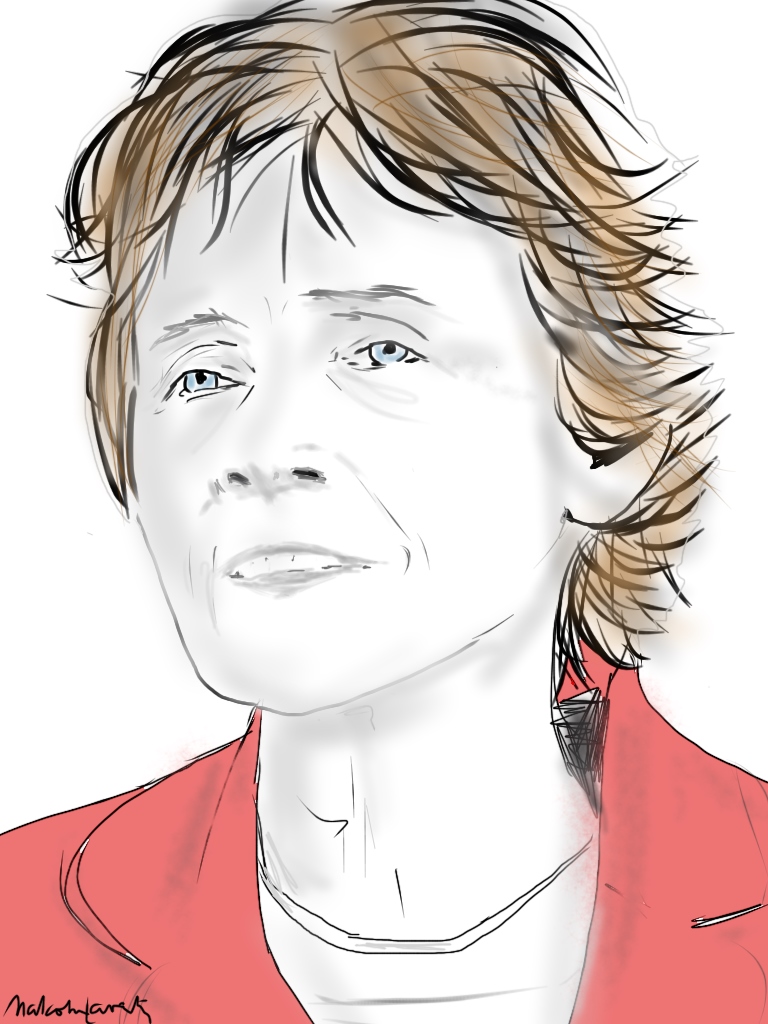
Ellen WilkinsonEllen Wilkinson – For much of Ellen’s life she appears to have held a ‘power’ motive however when selected as Minister, she appears to have gone into achievement overdrive absolutely obsessed with the implementation of the ‘Raising of the School Age’ and becoming very despondent when faced with difficulties. Several historians have argued this lack of ability to achieve what she wanted contributed to her untimely death while still in office.

Estelle MorrisEstelle Morris – Appears to be a classic example of affiliation. In her first interview after resignation she explained how she did not want togrow  “a thicker skin” to deal with the fact that people no longer liked her. Instead, she left the role.

Indeed, people often think that affiliation is the ‘nice’ motive – but the prickliness and defensiveness that comes when their motivation is shaken is not fun to work with.

Michael Gove

Michael Gove – So far Gove appears to be a classic “power” lover, perhaps most clearly revealed when recently questioned at an Education Select Committee about glitches in his policies he nonchalantly replied: “Coherence comes at the end of the process”. To think that whatever one does is inevitably going to come good suggests the motive is not meeting a clear goal, nor of being liked,  which leaves only one other choice!

This is only the start of my thinking about this issue, but it’s certainly an interesting thought. What has motivated past Education Secretaries? And does it matter?

Ellen WilkinsonEllen Cicely Wilkinson, PC

Born: 6 October 1891

Died: 6 February 1947 (aged 55)

Party: Labour

Dates as Education Minister: 26 July 1945 – 6 February 1947 (560 days)

Age when Minister: 53 yrs (9m) to 55 yrs (4m)

Best Fact: First female Education Secretary

Born to a methodist teetotal father in Ardwick, Manchester, Ellen Wilkinson was one of only a handful of female MPs during the 1920s. Not only this, but she also came from a working class background with a father who faced several periods of unemployment and a mother who suffered long bouts of illness (she died when Ellen was 25). Eventually her father gained employment as an insurance agent, cycling around their town collecting dues, and trying to ensure families gained financial support when needed.

Educated at Ardwick Elementary Grade School, Ellen was initially asked to stay on as a trainee teacher – even though she was just a few years older than her charges.  During her first term she noticed her pupils were bored stiff, marking time until they could leave at 14. She therefore set out to teach them Addington Symond’s The Renaissance until one day she was interrupted by the Head who wanted to know why the students were no longer sitting still with their arms folded. Ellen haughtily responded: “They are sitting that way because I am interesting them”. Soon after, she was asked to leave her teaching post; the Head advised her that ‘missionary work’ might be more appropriate.

From 1924 until 1931 Ellen was MP for Middlesborough East. One of only four female MPs, the women were forced to share a single office, they could not eat in the dining room, and the one toilet reluctantly provided to them was a quarter mile walk away. After losing during the 1931 election, Ellen later took up a seat in Jarrow where she worked tirelessly on domestic issues air raid shelter preparations, pensions, stopping ‘pay day loans’ (reminiscent of the lenders currently in contention at present).

Despite her deep reservations towards Attlee as Labour leader, he still asked her to take the role of Minster for Education in his 1945 Cabinet. She was the first women to take the role, and only the second woman to enter the Cabinet. During her tenure she introduced free milk for all students, relentlessly pushed through the raising of the school leaving age to 15, and helped found UNESCO.

Plagued by illness through the last months of her life, Ellen died in February 1947. The coroner ruled that her death was caused by heart failure as a result of a drug overdose. The verdict stated that the overdose was accidental.

Is she a contender for ‘greatest’ ever education secretary? Her status as the first female Education Secretary, plus her working class roots and exuberant personality mean that Wilkinson is fondly remembered. Unfortunately her short tenure, coming as it did during a financially tight time, plus her alleged ambivalence towards the ‘comprehensive ideals’ of the 1944 Education Act mean her contributions to education may not ultimately stand up to measure.

Ellen Wilkinson

FROM ELLEN:

On losing her Parliamentary seat: “It does an MP good to see that what he regarded as the centre of Britain’s whole life is to most folk a curious assembly with incomprehensible ways”

On transparency – “We do not doubt that justice, as a general rule, done. But it should always be remembered that justice is not enough. What people want is security for justice and the only security for justice is law publicly administered”

On the 1925 Zinoviev’s letter scandal – “A really good scare proves better than any argument”

On witticisms: “No authority can discipline anyone with a sense of humour”

On the BBC: “The BBC General is the judge of what we ought to want”

On house building: “I am sick of hearing about the sacred rights of private property. I want to hear about the sacred rights of human life”

On the grammar-school system: “If we are committed to three types of school one grand thing about the scheme is that it won’t work – at least not peacefully. It would hit the middle classes who would scream. Pupils of grammar or technical ability (with high IQ) should be separated on a functional basis, not by going to physically different/separate schools…let the lower IQs find their level in separate classes; arouse [their] interest by a practical side to their tuition; but don’t let the stigma of lower IQs attach itself to the whole school”

*

FROM OTHERS:

Paddy Scullion’s memory of Ellen: “Full of fire in a short fur coat”

Amy Mitchell on why Ellen remained unmarried – “Ellen was always so anxious to put the world to rights that love affairs had to wait”

Jack Lawson, Methodist Minister, on her death: “Quite simply (her passion) arose from the urge of compassion for mankind and a vision of the world that might be”


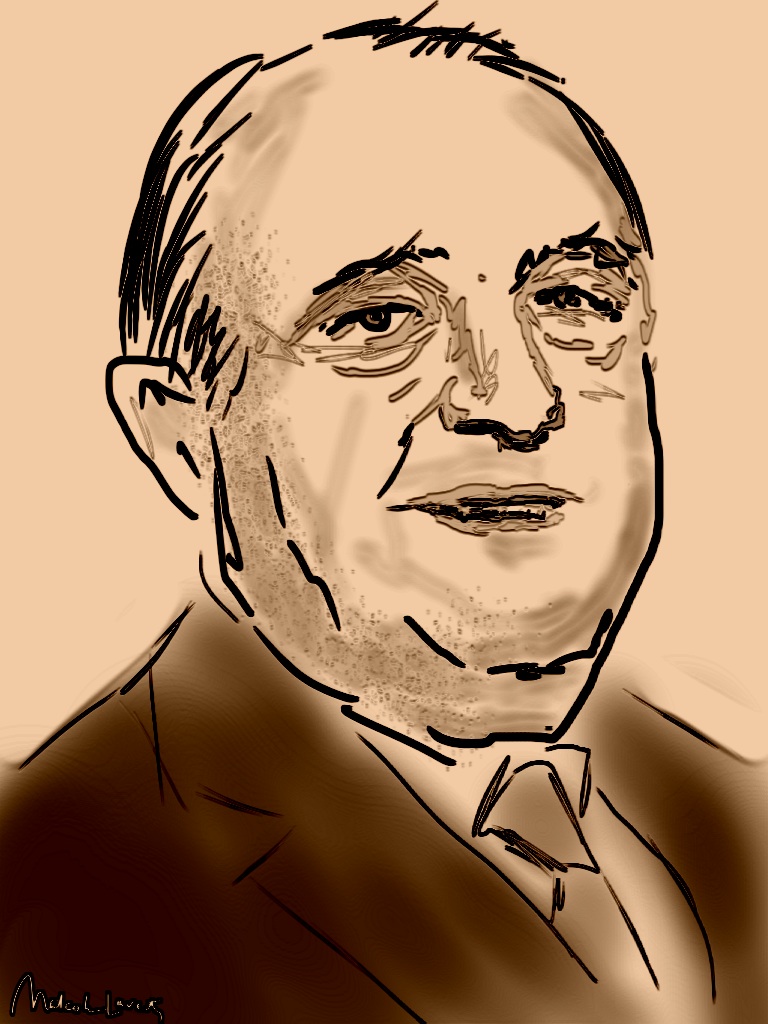
richard lawRichard Kidston Law, 1st Baron Coleraine PC

Born: 27 February 1901

Died: 15 November 1980 (aged 79)

Party: Conservative

Dates as Education Minister: 25 May 1945 – 26 July 1945 (62 days)

Age when Minister: 44 yrs (3m) to 44 yrs (5m)

Best Fact: Held position of Education Secretary for the shortest time, just 62 days.

Youngest son of ex-Prime Minister, Andrew Bonar Law, Richard held the position of Education Minister for just 62 days during Churchill’s caretaker government.

Educated first at Shrewsbury School and then at St. John’s College, Oxford, Law served Parliament for 23 years as an MP and a further 26 years as a peer – until his death in 1980.

As a hard ‘choice’ advocate we can only wonder what he might have done with the 1944 Education Act if he had remained in post. As it was, he had barely enough time for gathering paperwork before relinquishing the role to Ellen Wilkinson.

Is he a contender for ‘greatest’ ever education secretary? Barely even in the race.

Want to read like an education secretary?

Though he disliked learning Classics at school, Butler decided he must gen up on the subject before entering Parliament. Here is what he read:

I travelled with Xenophon across Asia Minor and was easily absorbed into Herodotus. I studied Cicero and Demosthenes for style – only to find that I got more from a four-volume edition of the speeches of the Younger Pitt which themselves came from classics. I took Macauly’s History with me, and read the lot, Doughty for the Red Sea, Froude for Oceana, Robert Louis Stevenson’s ‘In the south seas’, and many new authors in Australia and New Zealand on the experiments in state organisations and profit-sharing. While in India I read books on Dufferin, Curzon, and William Bentinck, and there conceived or admitted the great ambition of my life which was to be Viceroy of India.

Are today’s Education Secretaries so well read? Does it even matter?

Today’s post continues on from Part 1…..

Rab Butler faced a dilemma. After 40 years of waiting he was now being offered the chance of his dream job as Viceroy of India. Turn it down and the job would unlikely be offered again. Take it and the 1944 Education Act, a bill he had toiled at, might fall apart.

In the end, the decision was simple. Churchill and Butler had never been good friends, with the two clashing on issues of Empire and India. Butler was unconvinced he could implement any satisfactory changes when they would need to pass via Churchill. Butler also thought it unlikely that he was Churchill’s first choice for the role, meaning there was always the possibility it would be pulled away in the last minute. Hence, he declined.

Unfortunately, Churchill would still prove to be a blockade for Butler: he needed his approval on the Education Bill, even though he had specifically said he would not consider such reforms while the war was ongoing. In March 1943 Butler was asked to spend the night at Chequers. Once there Churhill read aloud a prepared speech about Britain’s post-war future, in which he described education’s role.  On finishing, Churchill told Butler he must re-write it overnight and make it better (even though Churchill would not release him from social activities until 1am). In the original speech Churchill promised national school standards and an immediate raising of the the leaving age. Butler’s rewrite softened the leaving age (it would instead be ‘progressively prolonged’) and added the new religious arrangements.

Churchill called for him the following morning:

…at a quarter to eleven my presence was demanded and I found him in bed, smoking a cigar, with a black cat curled up on his feet. He began aggressively by claiming that the cat did more for the war effort than I did, since it provided him with a hot-water bottle and saved fuel and power. Didn’t I agree? I said not really, but that it was a very beautiful cat. This seemed to please him.

Churchill looked at the new speech and Butler revealed his intentionto draft a new Education Bill encompassing the church school changes. Churchill ignored his comment.

Heartened by Churchill declining the opportunity to outright stop the idea Butler moved forward and in January 1944 moved the Second Reading of the bill in the House of Commons. Some attacks were raised, but only a few. Butler’s careful costings and claims that it would ‘take a generation to implement’ helped calm fears.

By August 1944 the Bill was through and Butler received a telegram:

“Pray accept my congratulations. You have added a notable Act to the Statute Book and won a lasting place in the history of British Education. Winston S. Churchill”

Henceforth, every child had the right to a free secondary education for at least four years (eventually five). Though the school system was initially split across grammars, moderns and technical, Butler’s view was that the buildings would gradually combine onto one site (known in original documents as ‘multilateral’ schools rather than comprehensive). The Act also included provision for a progression toward compulsory part-time education up to the age of 18; a policy that has yet to fully come to fruition.

No doubt Butler was chomping at the bit to implement the new school plans he had worked so hard to complete. Unfortunately, the 1945 General Election loomed on the horizon.

Am now getting near the end of Rab Butler’s autobiography. The later chapters mostly cover his time as Chancellor and working in the Home and Foreign office. The chapter on his role as Education Minister retold his involvement in the 1944 Education Act and I thought it was worth recounting that process because of the insight it gives into the passing of education bills.

*

The 1944 Education Act is considered one of the most significant education reforms of the 20th century. But it was not supposed to be this way. Eight years earlier the 1936 Education Act laid down the same law now associated with the ’44 act: that every child should remain in school until aged 15. With a three year lead-in period the policy was due to start on 1st September 1939. On that day, Germany invaded Poland.

The perils of war rained hard on the education system. Evacuation, loss of male teachers, the use of school buildings for war ministries, all meant countless interruption. Educational operations could at best be called ‘hazy’ during this time. The poverty and lack of literacy among the inner-city children bundled off to the doorsteps of the wealthier also brought a growing awareness of England’s educational inequalities. Not for the first time education became the rally cry for anyone who wanted to improve these children’s futures, and so it was that Butler was handed the job of preparing for a better situation once the war was won. [The idea that England would not be the ultimate victors appears never to have entered Butler’s mind].

In June 1941 he published “The Green Book” – a plan for a ‘multilateral’ schooling system that would abolish ‘extreme inequality of wealth and possessions’. The NUT responded with their own “Dark Green Book” and the Directors and Secretaries Association published an “Orange Book” giving their views on the matter. Coloured books were clearly the blogging of its day.

More inclined than later secretaries to listen, Butler took the books seriously and attempted to move his position.

Unfortunately, not everyone was pleased by his actions. Churchill sent a letter on the 13th September 1941 stating:I certainly cannot contemplate a new Education Bill. Churchill was concerned that any quality education system threatening private schools would be a distraction right at the time he needed the elites most. He was probably right. Butler henceforth laid off the public schools (he had previously suggested integrating them) but continued writing his Bill.

A thornier problem was that of the ‘provided’ and ‘non-provided’ schools. In the 19th century most schools were operated by voluntary bodies who raised money from public subscriptions. From 1833 the State also provided funds to ‘assist’ the schools. By the early 1900s the largest voluntary provider, the Church of England, educated nearly two million children. However, two and a half million were also by this point educated in local government schools. If church schools needed money for new buildings, or to pay more teachers, they were given money by the state, however attending religious school was only possible if you of that faith. Taxpayers then asked: Why should the state fund schools that our child (of a different religion) cannot attend? [That it took England so long to become annoyed by this is fascinating; America had a similar debate a hundred years previously].

The debate had rumbled on, but by the 1940s Church of England schools were now the ones most in need of repair. Many had too few pupils to be economical. And the discriminatory policies the schools had towards teachers, often underpinned by racist tendencies, irked the NUT. Butler knew that in a post-WWII world, where money was tight and needs high, handing over cash for the necessary repairs to CoE schools considered discriminatory and elitist was going to split spleens.

Through intense negotiation Butler therefore got the agreement of many Anglican districts to hand over their school building to the local authority; in return, schools would teach an agreed religious studies [This move much delighted Churchill who teased Butler by calling it the ‘County Council Creed’ and asking whether Butler was planning to create a State religion.]

The Roman Catholic church, however, was less concilliatory. They called the new curriculum ‘Disembodied Christianity’ and argued they had not spent millions building schools in the 19th century to simply hand them over to the council. It was a fair point.

Butler’s next compromise bestowed two new phrases on our educational landscape. He offered Church schooles the choice of becoming either ‘controlled’ or ‘aided’. If ‘controlled’ the LEA would be responsible for all the school’s costs, the appointment of teachers, and the children would be taught the ‘County Council Creed’. If a religious school chose the ‘aided’ path then the LEA was responsible for teacher salaries and the running of the school, but managers were responsible for alterations to bring the building up to standard. On the plus side aided schools could hire and fire all teachers at will, and could teach religion as they wished.

Still, the churches would not play nicely.

At least, not until Butler revealed the hard facts. Over 90% of Church Schools were 40+ years old and the Church simply did not have enough money for their upkeep. They, and Rab, knew it. Butler’s deal was a solid one: the ones who shifted to the LEA got their curriculum and retained choice over their leaders but the building costs were sucked up by the LEA who could quell the baying crowds by explaining that they now had control over recruitment, admissions, etc.

All was exciting and the passing of the Act finally looked assured. It was only then that Butler got a phone call. He had finally – after years of waiting – been considered for the role of Viceroy to India, his dream job, and was asked if he might wish to take it?

Of course he wanted to go. It was what he had dreamed about for so long. But the Bill was in a fragile way. Without him it was entirely possible that it would fall apart. What on earth was he to do?……

Over at TimeToast I’ve developed an interactive timeline showing birthdates of the Education Secretaries. Unfortunately, because it uses Flash the timeline won’t show up directly on this blog or on most phones. [Boo to technology]. Instead there’s a screenshot below and clicking on it takes you to the website where you can play around.

Most interesting fact? No Education Secretaries so far were born between 1953 and 1966.

Ed Sec Timeline


Rab ButlerAfter struggling at sport and failing his Eton entrance exam, Rab Butler (future Education Minister) focussed on improving his mind.  But how?

1. Square your marks – Butler’s Classics teacher gave tests out of 6 and then required students to ‘square’ their marks. This meant that a respectable four out of 16 only resulted in one receiving 16 out of 36 after squaring. The squaring motivated Butler to push for those two extra points.

2. Be clever, with an interest – Butler focused on modern languages, literature and history instead of Classics. He did so because he was told “be captivated by your subject”. His subsequent Cambridge First suggests it was a smart move.

3. If you must learn something, do it properly – When Butler learned French he forced himself to read Gautier, the French writer with the widest vocabulary. Each day Butler would write down new words encountered, rehearse them, and then recount them the next day. When Butler wanted to learn German, he moved to Austria.

4. Focus on your strengths – Butler made ‘seriousness’ a motif in his debating skills as a way of hiding his lack of humour. He later secured a position as President of the Cambridge Union. He used the same focus to pull off a First in History after planning in advance precisely how he would spend his entire final year. Even though Butler was gravely ill for one his finals exams he achieved top marks for the paper and was awarded a University Fellowship.

5. Don’t just learn from books – Classical smarts were important to Butler but he also realised it wasn’t everything. He would later remark that his policies for employment were more influenced by the sight of desperate men queuing day-after-day at the labour markets than it was by anything he read.

Rab Butler’s childhood stories of living in India involve elephant rides, camping under hot skies, and the fact that no English person ever remained there once they hit sixty.

Butler recounts one particular incident that notably impacted his future opinions:

One day when out riding round Jakko, I ordered my sais to let go of the reins. Galloping around a corner, I was thrown and hopelessly broke my right arm. The sais did not catch up and the first to pass was a Sikh who ‘passed by on the other side’ and left me. All my life, especially when I was Under-Secretary for India, I was quite unjustly cautious of Sikhs.

Butler’s arm was so badly broken he later suffered with Volkmann’s Contractions, leaving him with a permanently weakened handshake and a lifetime of therapy. However, his pain was not his family’s main concern:

My father’s sorrow was terrible. He was brought up in the public school tradition and felt that my whole future as an athlete would be prejudiced. Indeed this proved to be so.

Butler’s family therefore turned their attention to schooling:

I fancied myself an Eton scholarship, and so did my mother, but my schoolmaster was very discouraging. However I went up and sat the papers. At the end of the second day a man in a gown read the names of those who were requested to stay and continue. Mine was not included. I went and spoke to him asking if there had been a mistake; he said there had not. My mother, who met me on the bridge in the High Street, hid her disappointment and cheerfully insisted that we must buy a camera immediately. So I took a picture of her on the bridge, but this did not come out either, due to faulty exposure.

If Butler had been told on that day of his many future achievements one wonders if he would have believed it.