Archive

Tag Archives: history

Acknowledgements page from Rab Butler’s “Art of The Possible” Biography.

Not one of the most exciting in the acknowledgement series, but big question:  Who are the Shephard family, and why do they own so many cartoons?

I am indebted to those whom I had given the bulk of my political papers, and the copyright therein, for making these papers available to me and to Peter Goldman, and for dealing with the business aspects of the publication of this book.

We are indebted to Lucia Santa Cruz for assisting with historical aspects, especially in the chapter on the Munich period,  and to Robin Allen for research work, particularly in connection with the reform of the Conservative Party after the defeat of 1945, also to Michael Fraser for political advice. I make grateful acknowledgements to the many others who have kindly read individual chapters and commented upon them. My secretary, Julia Fish, has provided much help with the preparation of the sheets for publication, and to her too I offer my gratitude.

For permission to reproduce cartoons to David Low, Vicky, Giles, and Ernest Shephard I am obliged to the David Low Trustees, the Evening Standard, the Daily ExpressPunch and Associated Newspapers Ltd.

Chapter titles give the flavour of a life. Here’s Butler’s:

Introduction

Preface

Acknowledgements

I. EARLY INFLUENCES

II. THE LONG HAUL

III. GOVERNMENT OF INDIA

IV. INTO WAR

V. WILLINGLY TO SCHOOL

VI. THE EDUCATION ACT

VII. THE CHARTERS

VIII. “UNE IDEE EN MARCHE”

IX. HINGE OF DESTINY

X. LARGE ELEPHANT

XI. CUSTOMARY PROCESSES

XII. PASTURES NEW


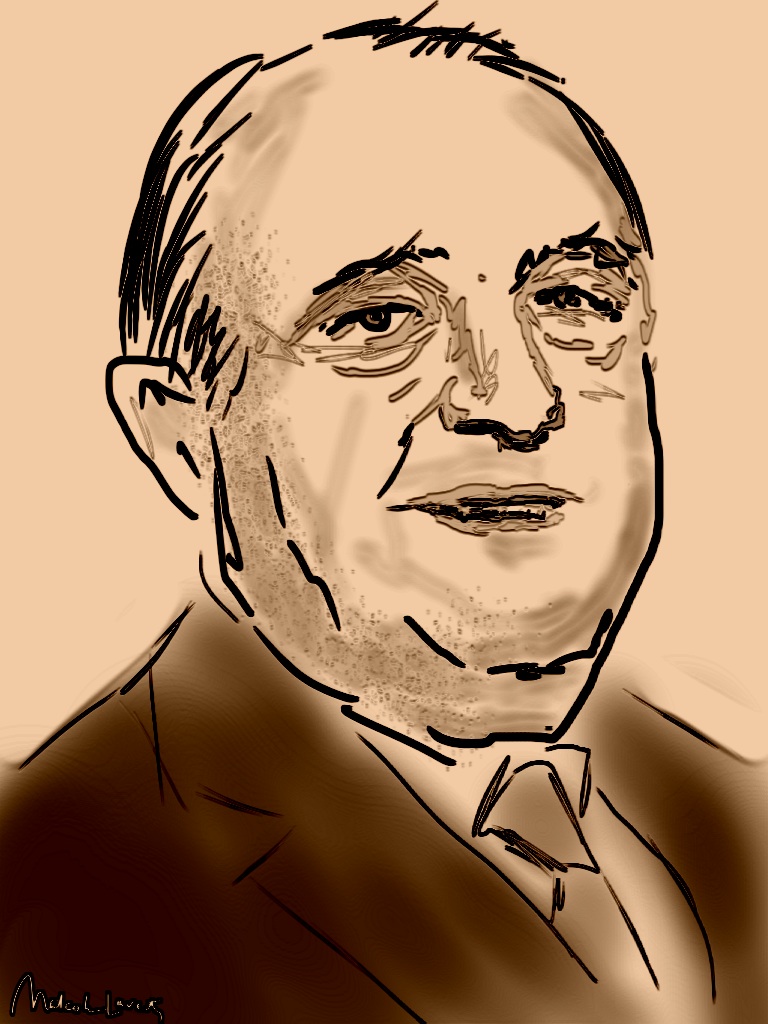
Rab ButlerRichard Austen Butler, Baron Butler of Safron Walden

Born: 9 December 1902, Attock Serai, British India

Died: 8 March 1982 (79), Great Yeldham, Essex

Party: Conservative

Dates as Education Minister: 20 July 1941  – 25 May 1945 (1405 days)

Age when Minister: 38 yrs (7m) – 42 yrs (5m)

Educated first in British India, ‘Rab’ Butler was later taught at Marlborough College and then Pembroke College, Cambridge. Like many other Education Secretaries after him, he was the President of the Cambridge Union Society.

In his Parliamentary career, Butler first acted as Under-Secretary of State for Foreign Affairs before taking up the position as President of the Board of Education, then later the newly-invented role of Minister for Education. During his office Butler passed the landmark 1944 Education Act, the foundation for compulsory secondary schooling for all. After education, Butler subsequently served as Chancellor of the Exchequer, Home Secretary, First Secretary of State and Deputy Prime Minister. He was the Saffron Walden MP for over 36 years.

Is he a contender for ‘greatest’ ever education secretary? Yes. Oh yes.

To start us off on our quest, here’s a google maps showing the birthplaces of all UK Education Secretaries*. Can you find the one born outside of the UK?


*bar Geoffrey Lloyd, Fred Mulley & John Patten – If you know these, leave a comment so I can update.

Starting on July 9th 2013 and continuing for as long as it takes I am reading the autobiographies of every ex-Education Secretary of State since 1944. I’ll be blogging excerpts & thoughts as I go.

My driving question: Who was the greatest Education Secretary of all time, and why? (With a secondary aim of better understanding the people in this role. After all, teachers complain politicians don’t understand them, but teachers should also understand politicians).

The first book is Rab Butler’s “The Art Of The Possible” (yes, I know he wasn’t technically a Secretary of State).